


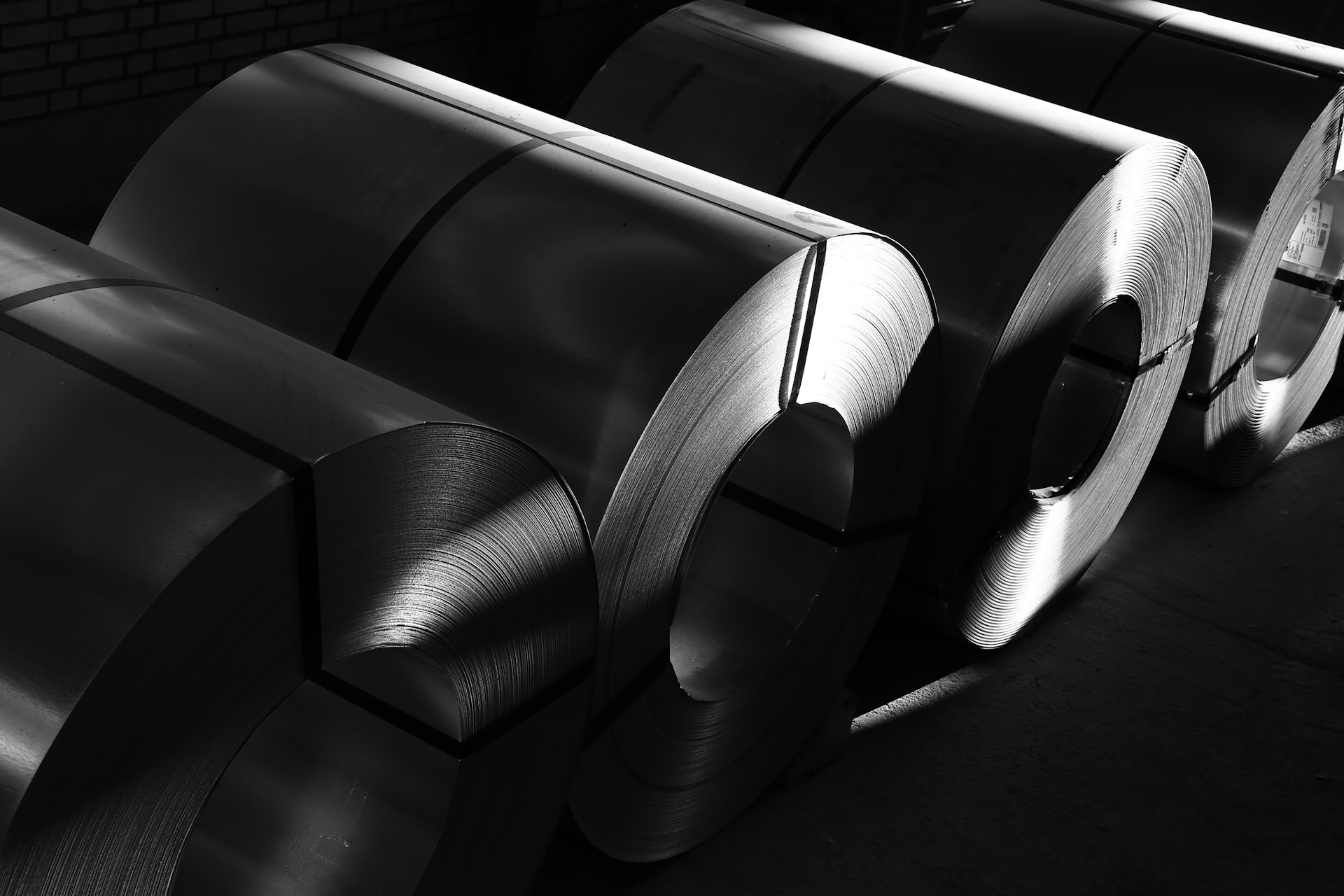
Steel doesn’t go straight from mill to job site. That’s the part most people don’t think about.
Between the furnace and the fabrication shop sits a steel stockist — a distributor that buys in bulk, warehouses the material, and gets it to businesses in quantities they can actually use. Construction firms, engineering companies, manufacturers — they all depend on this middle layer more than they might realise.
Here’s why that matters.
The Gap Between Production and Demand
Steel mills work at scale. They produce massive quantities, optimised for efficiency, not for the specific order a mid-size contractor needs next Tuesday. A steel stockist bridges that gap. They buy large volumes, store it, cut it, prepare it — then ship what’s needed, when it’s needed.
The operational chain looks roughly like this: bulk purchasing from mills, quality inspection, warehousing with proper handling systems, processing to customer specs, and finally delivery. Simple in theory. Genuinely complex in practice.
What Makes or Breaks a Stockist
A few things separate the good ones from the rest.
Inventory management is probably the hardest. Hold too much and storage costs eat into margins. Hold too little and customers start calling competitors. Getting that balance right requires decent forecasting and a solid read on demand cycles — construction picks up, construction slows down, and steel prices move with it.
And those prices move. A lot. Global commodities markets, energy costs, geopolitical disruptions — all of it feeds into what steel costs on any given week. Stockists absorb some of that volatility or pass it on. Neither option is painless.
Then there’s product range. Customers don’t just need “steel” — they need specific grades, specific dimensions, often with tight tolerances. A stockist that can’t offer variety loses business fast.
Why Businesses Use Them
The practical case is straightforward. Working with a steel stockist means faster access to materials (no waiting on mill production cycles), no need for customers to maintain their own large storage facilities, and the ability to order project-specific quantities rather than bulk minimums. For any construction or manufacturing project where a delay in materials means cost overruns, that reliability is worth paying for.
Technical guidance matters too. Not every procurement manager knows which grade suits which application — a good stockist adds value there, not just in logistics.
Technology Is Changing the Game
Real-time inventory tracking across multiple warehouses. Automated ordering platforms. Predictive analytics for demand forecasting. These aren’t futuristic — they’re already reshaping how steel distribution works. The stockists investing in these systems are getting faster, more accurate, and harder to compete with.
Digital communication tools have also simplified the customer side considerably. Requesting specific materials, tracking orders, getting updates — it’s all faster than it was five years ago.
Where the Industry Is Heading
A few trends are worth watching.
Sustainability is pushing stockists to source recycled steel and lower-carbon materials. Not because it’s trendy — because clients are asking for it, and regulations are starting to require it.
Customisation demand is growing too. Automotive, construction, aerospace — these sectors want tailored solutions, which means stockists are expanding processing capabilities: cutting, machining, more precise preparation.
And automation is hitting warehouses. Better handling systems, less manual labour, improved safety records. The warehouse of 2030 won’t look much like the one from 2010.
Picking the Right One
If you’re evaluating a steel stockist, the checklist is short but important: range of grades and sizes, product quality consistency, delivery speed, pricing transparency, and — this one gets overlooked — the ability to handle urgent requests. On time-sensitive projects, that last point can make or break a schedule.
The role of the steel stockist isn’t glamorous. But take them out of the supply chain and you’d feel it almost immediately — in delays, in costs, in the kind of friction that quietly kills project timelines. They keep materials moving. And in an economy built on construction and manufacturing, that’s not a small thing.
